
How Structured Process Engineering Drives Higher Yield
In medical device manufacturing, precision isn’t just a performance metric — it’s a regulatory requirement. Every feature, every tolerance, every surface finish must be produced with consistency that protects patient safety and supports scalable, profitable production.
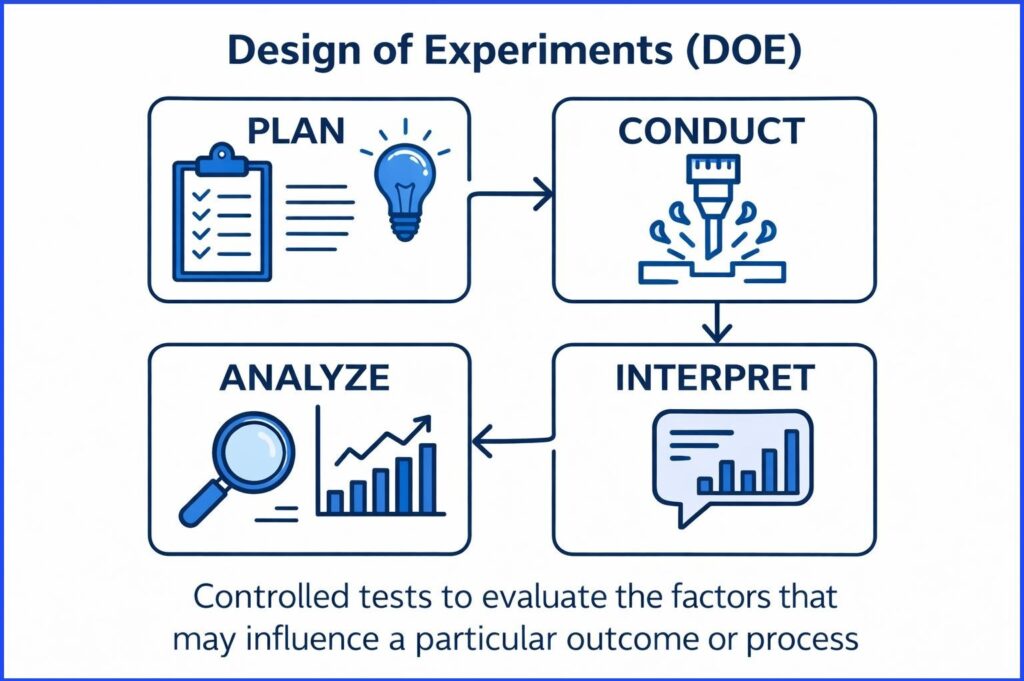
Design of Experiments (DOE) is the process of planning, conducting, and analyzing controlled tests to evaluate how different factors influence a specific output. It is a systematic, statistical method that determines the relationships between multiple input variables (factors) and their resulting outputs (responses). By changing multiple factors simultaneously, DOE replaces inefficient trial-and-error with a data-driven approach to optimize processes, identify root causes, and minimize costs. DOE provides a structured, data‑driven way to understand how machining variables interact, which factors truly influence variation, and how to optimize a process for maximum yield. That’s why leading manufacturers increasingly rely on this process as a core process engineering tool.
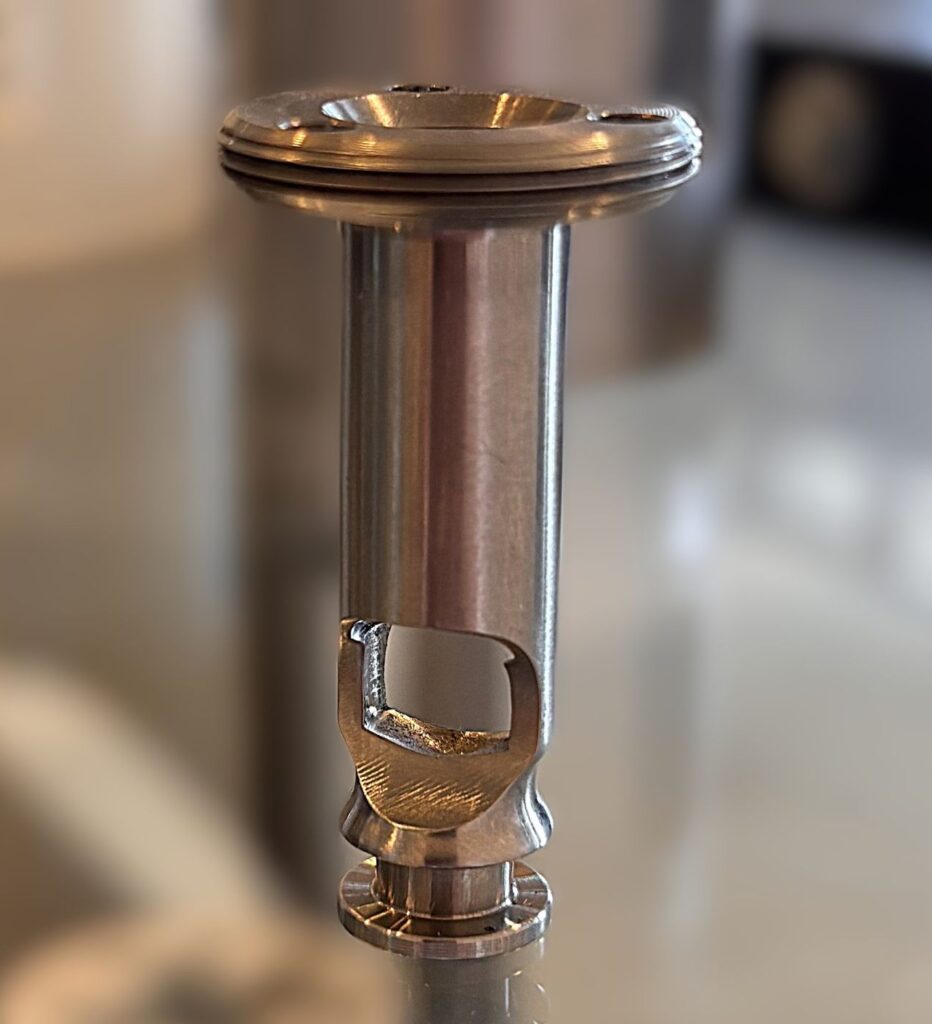
At MedFab, DOE is embedded into how we develop, validate, and refine machining processes for Class II and III medical devices, micro‑machined components, and high‑tech assemblies. Below, we break down the fundamentals — and share a real MedFab case study showing how DOE improved yield by 27% on a critical titanium micro‑machining operation.
Why DOE Matters in Medical Device Process Engineering
Improving yield in medical device production means increasing the number of high‑quality, sellable components while reducing scrap, rework, and variability. Because medical devices operate under strict regulatory oversight, yield improvement isn’t just about efficiency — it directly supports:
- Product safety by reducing defect rates
- Regulatory compliance through documented, validated process control
- Cost reduction via lower scrap and stabilized tool life
- Scalability as production ramps from prototype to volume
Traditional trial‑and‑error approaches can’t reliably uncover the complex interactions between machining parameters. DOE, however, is built for exactly that.
What DOE Does: A Quick Breakdown
A well‑designed DOE allows R&D engineers to:
- Identify which process variables truly affect output
- Quantify how those variables interact
- Optimize the process window for stability and repeatability
- Validate improvements with statistical confidence
In precision machining, DOE often evaluates factors such as:
- Spindle speed and feed rate
- Tool geometry and coating
- Coolant flow and temperature
- Toolpath strategy
- Machine warm‑up or thermal stabilization
- Workholding method
By testing combinations of these variables in a structured way, DOE reveals the “sweet spot” where the process becomes predictable, capable, and repeatable. MedFab uses DOE to bring our customers’ products to life and to market. Let’s look at how MedFab can improve the yield of your designs. Get in touch today.